Growing Jade Plant-The Largest Jade Plant in the World-Beautiful Jade Plants

Growing Jade Plant-The Largest Jade Plant in the World-Beautiful Jade Plants

Largest Jade Plant (indoor) in the WORLD!!How to grow Jade Plants-Nursery-Garden-Indoor Garden

Growing Jade Plant-The Largest Jade Plant in the World-Beautiful Jade Plants RSS Feed


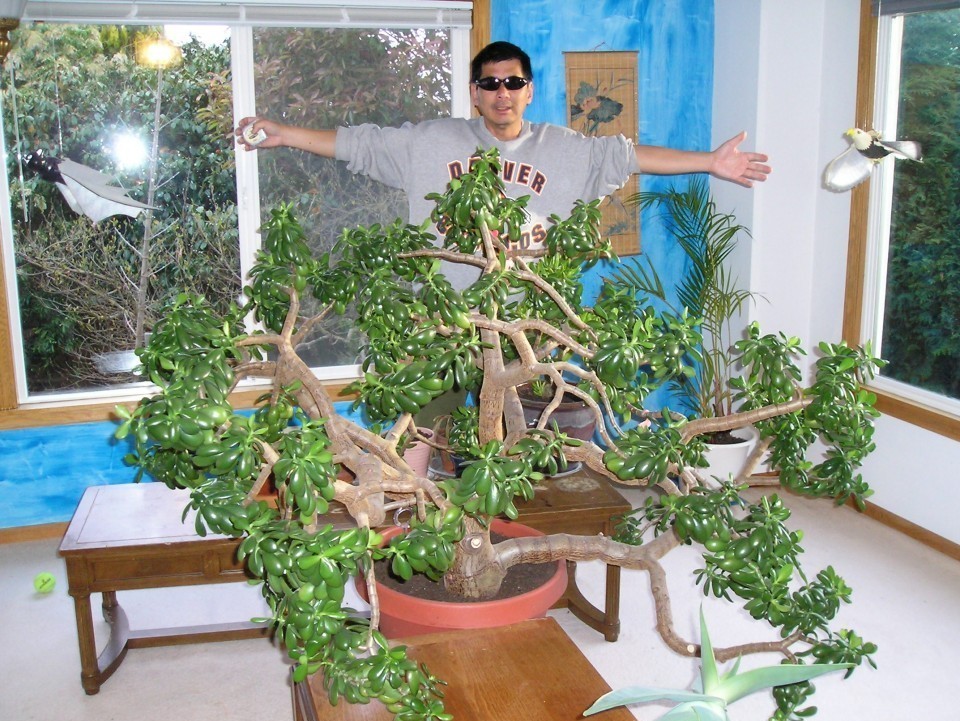
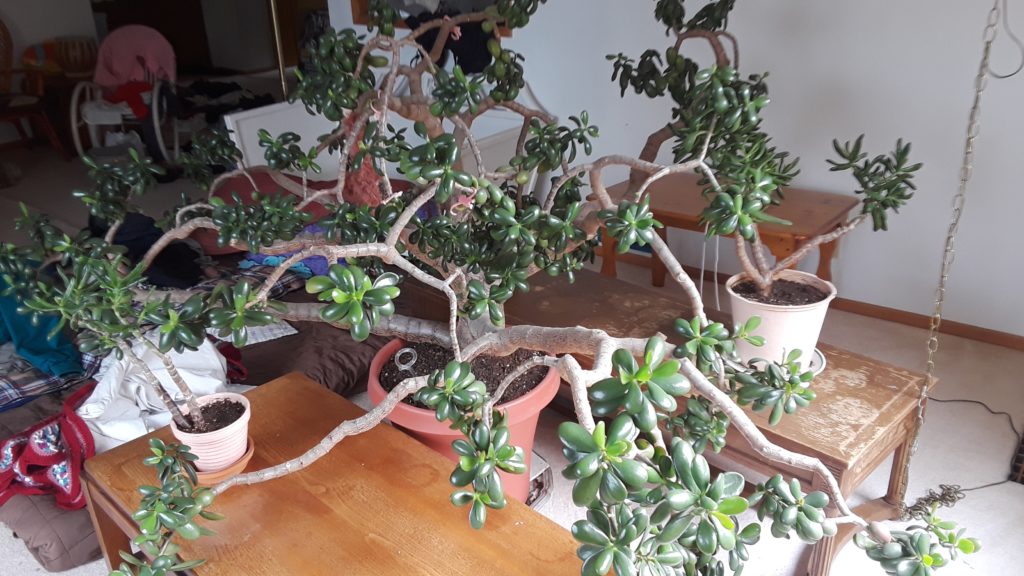
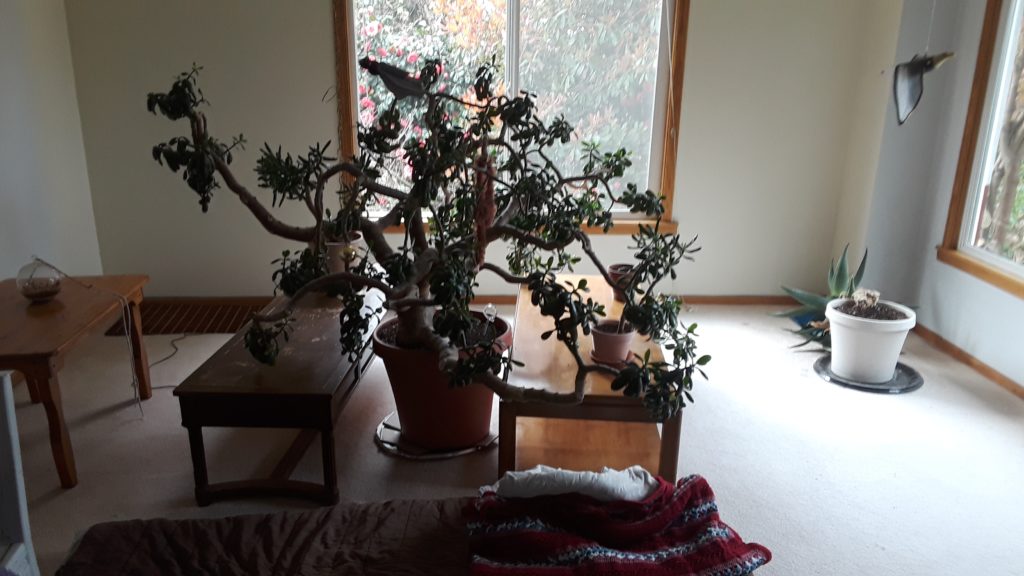
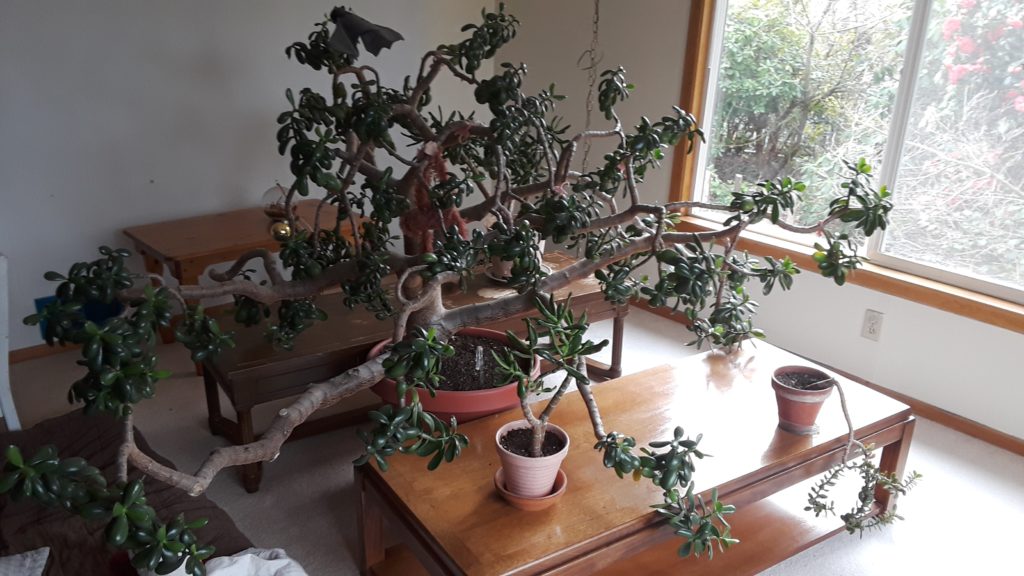
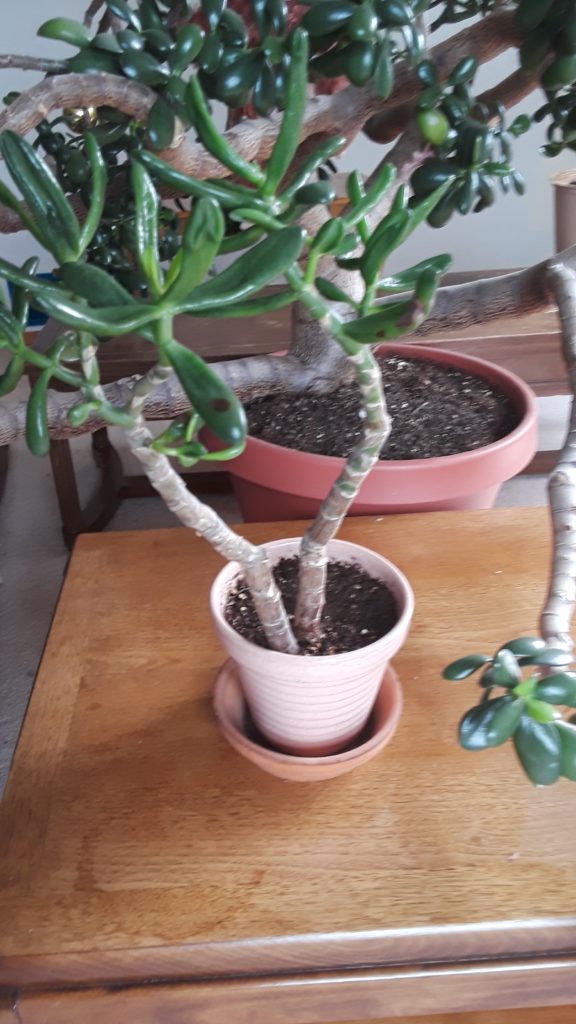
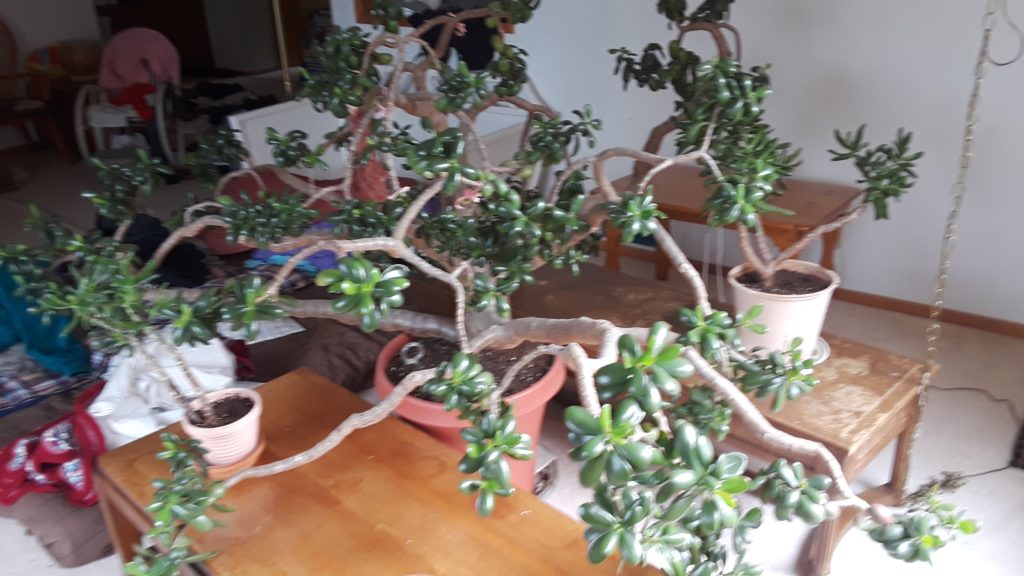
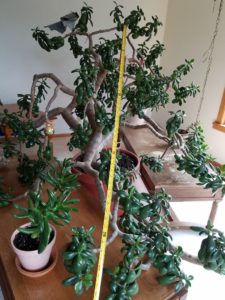
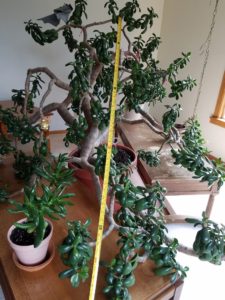
The Largest Jade Plant (indoor) in the WORLD

Photobucket

Finally she flowers on X-Mas Day, best present I ever had. More pictures at the Forum.

Photobucket

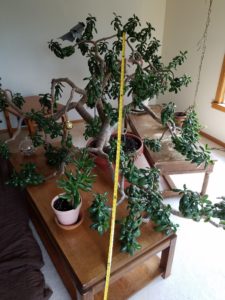
FACTS:

Location: Seattle, WA

Room temperature: 50-60F

Age:15yrs old

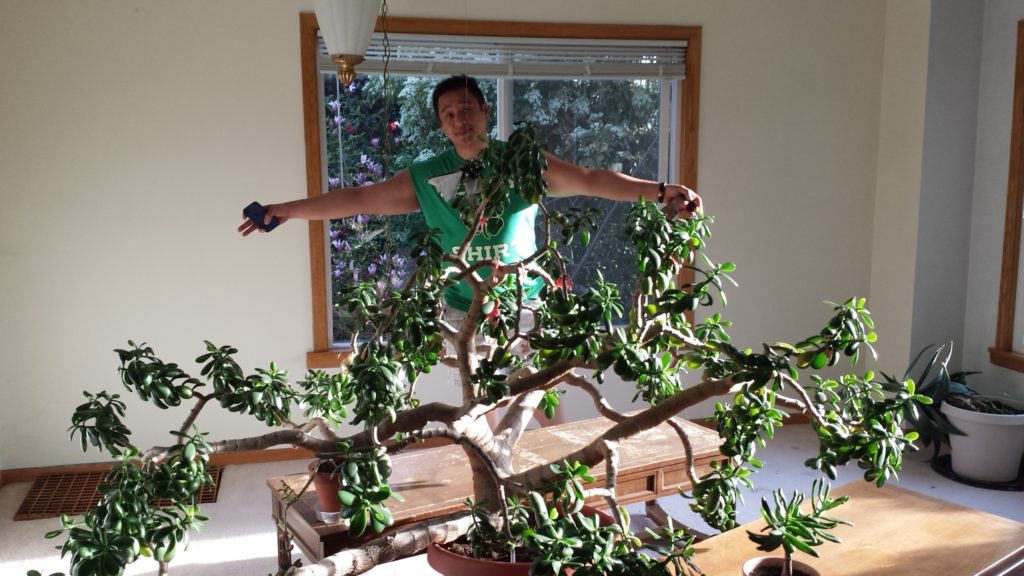
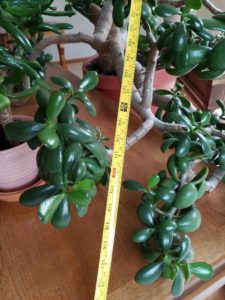
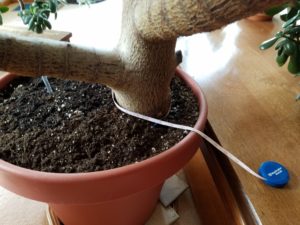
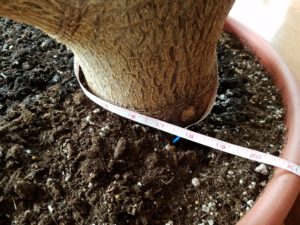
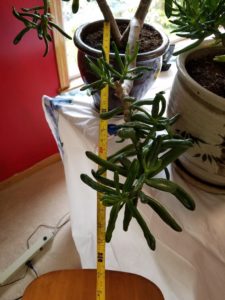
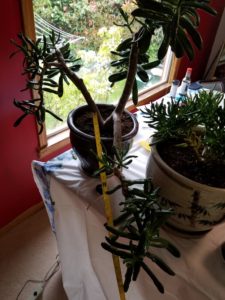
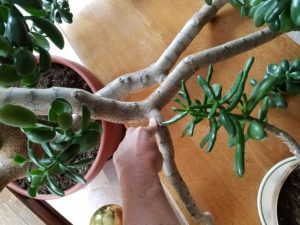
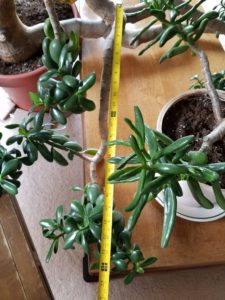
Height: 4’11”

Width” 5’ 6”

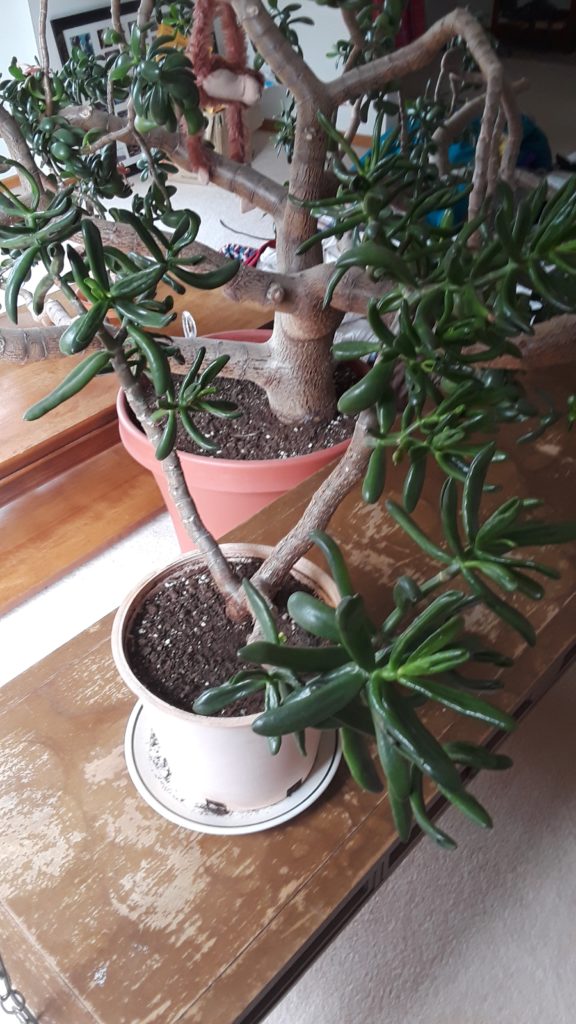
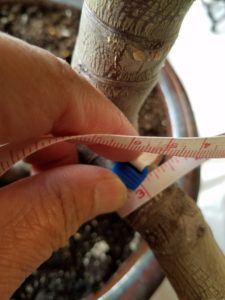
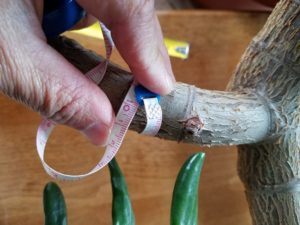
Trunk Size: 15 “

Pot size:18 X 21

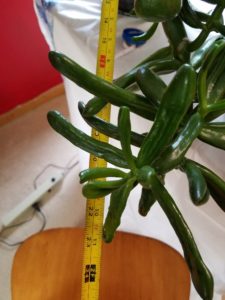
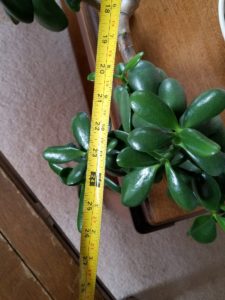
Leaf size: 2-3”

Care: Water once a week in Summer and once every 2 weeks in Winter. Use good clean fertilizer .

Lots of TLC….and lots of good loving talking.

Use it as my Christmas tree

Flowering: Oct 25th, 2008!! Whopeeee

Click here to see more pictures of Jade Plant.

Join the Forum—to upload your garden photos,view more photos and talk about gardening.

NurseryListing.com– find a nursery near you.

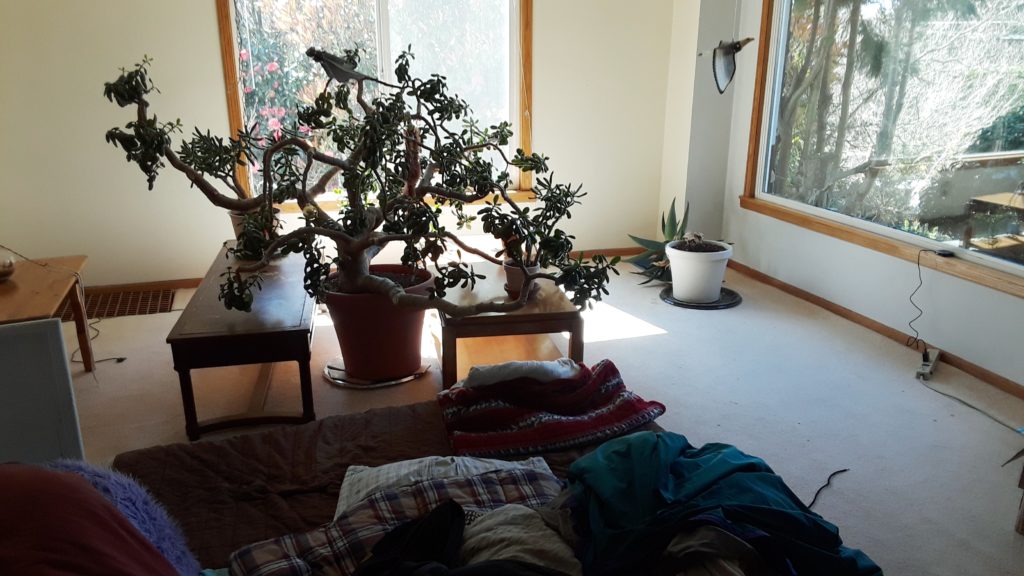
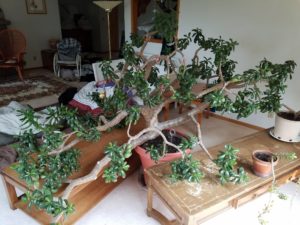
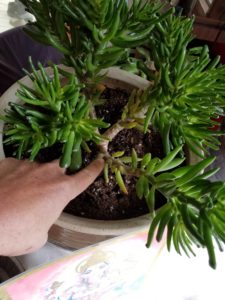
The jade is so big that there is no way she can be moved out of the house. She goes with the house-she is part of the house. A beautiful living breathing human being in the living room. Call me crazy all you want and yes I do talk to her all the time.

Photobucket

The last time I changed the soil was in 2007 and the soil I used is the one I got from Home Depot, nothing special soil—just the clean good soil.

Photobucket

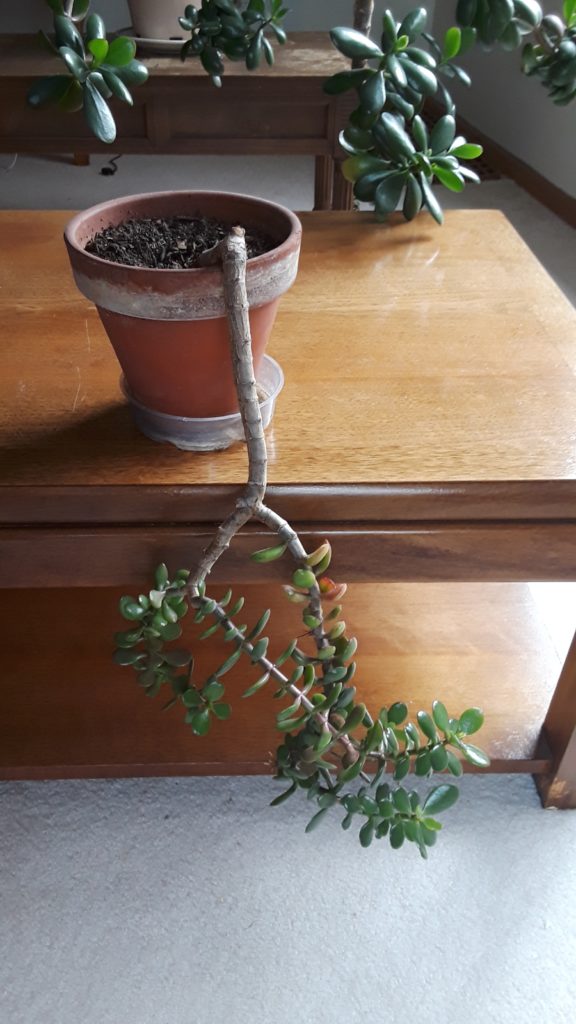
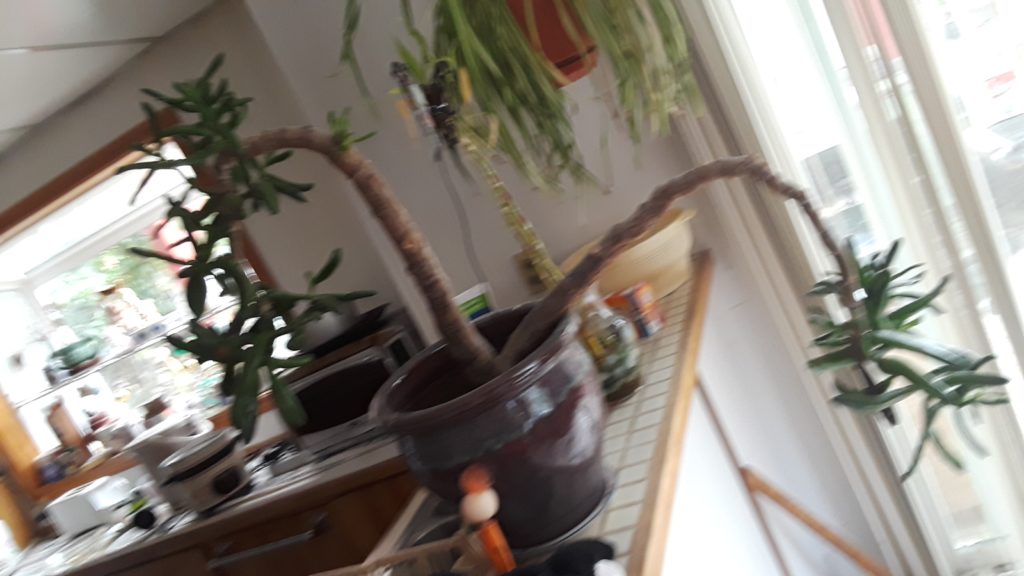
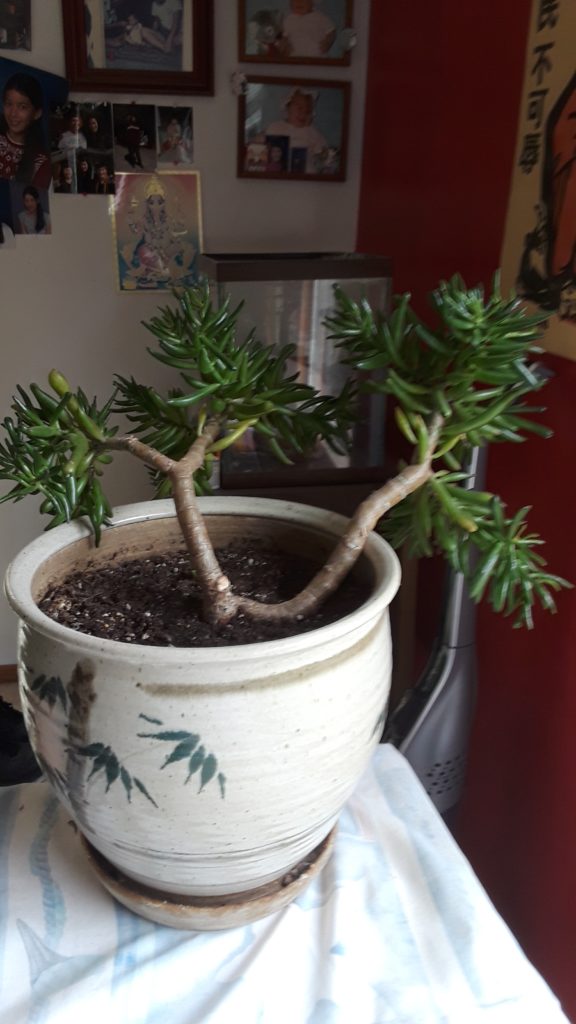
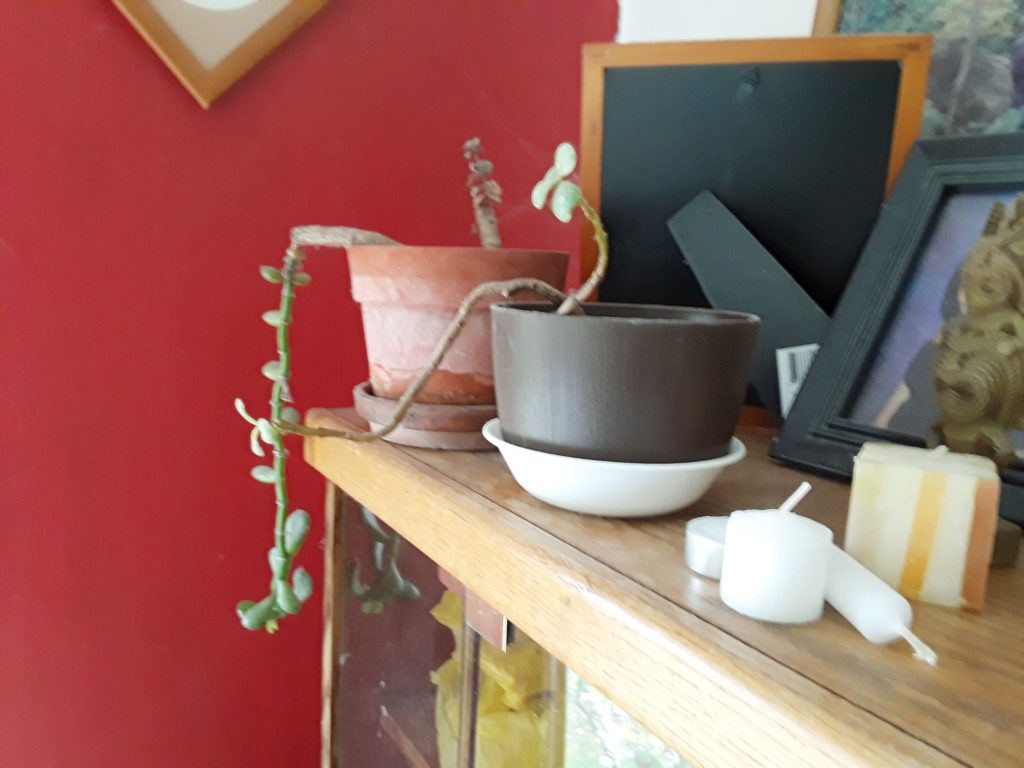
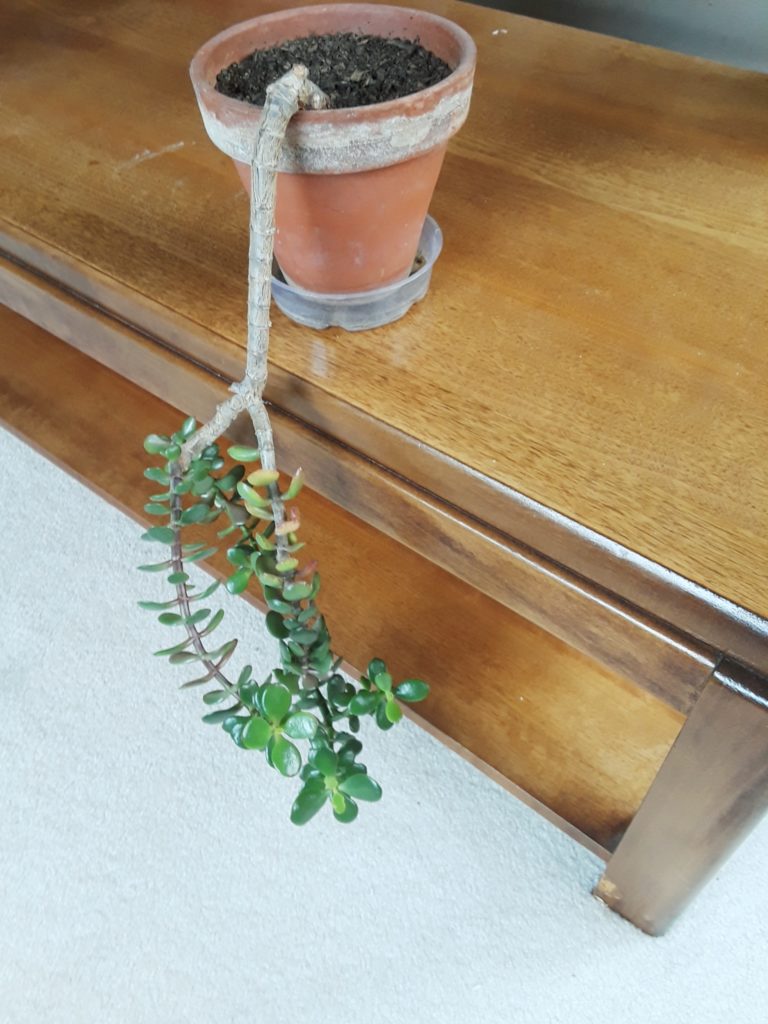
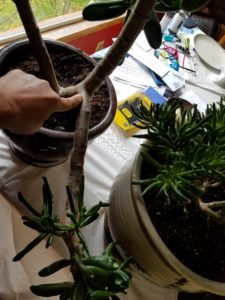
As you can see from the pictures, I have to put the long table against the pot to prevent the pot from tipping over. She has to be transferred to a bigger, newer, and a more stable pot with wheels. Don’t ask me how I am going to do it, maybe a couple of Hulks will help me out.

During Summers, the leaves grow like crazy and buds start shooting up. I have to break the buds off. Water once a week.

During Winters, water once every 2 weeks.

No special fertilizers needed, just good old TLC.

I have given some of the shoots to my friends and all of them are doing very well.

Anyway, I think this is the largest jade plant in the world, if not, please send me your jade plant(s) pictures. You can post your pictures at Forum .

I always love Jade plants as they bring the good ying and yang, peaceful harmony to the house. See that lottery ticket at the jade flower……my time has come for the big one $$$.

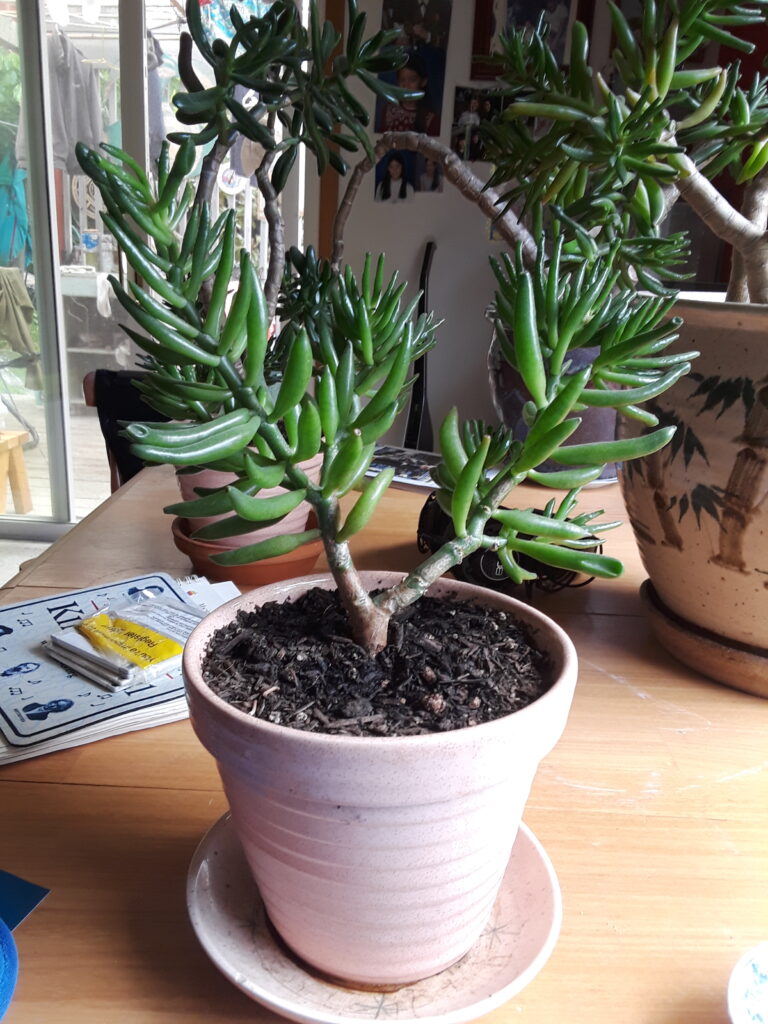
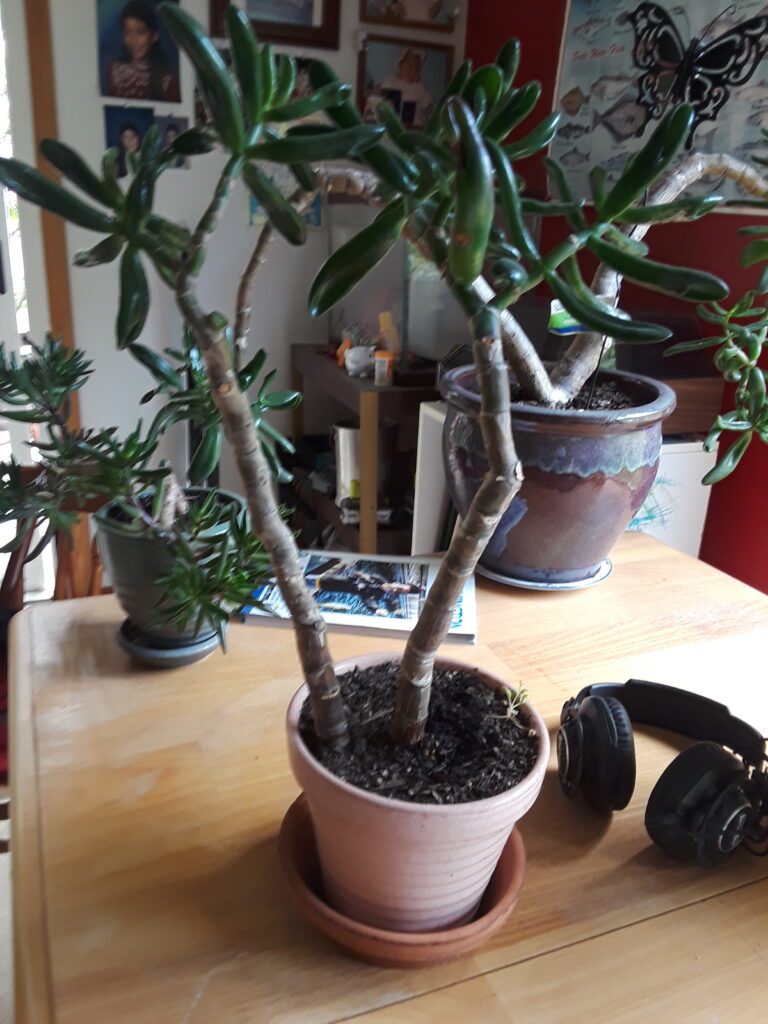
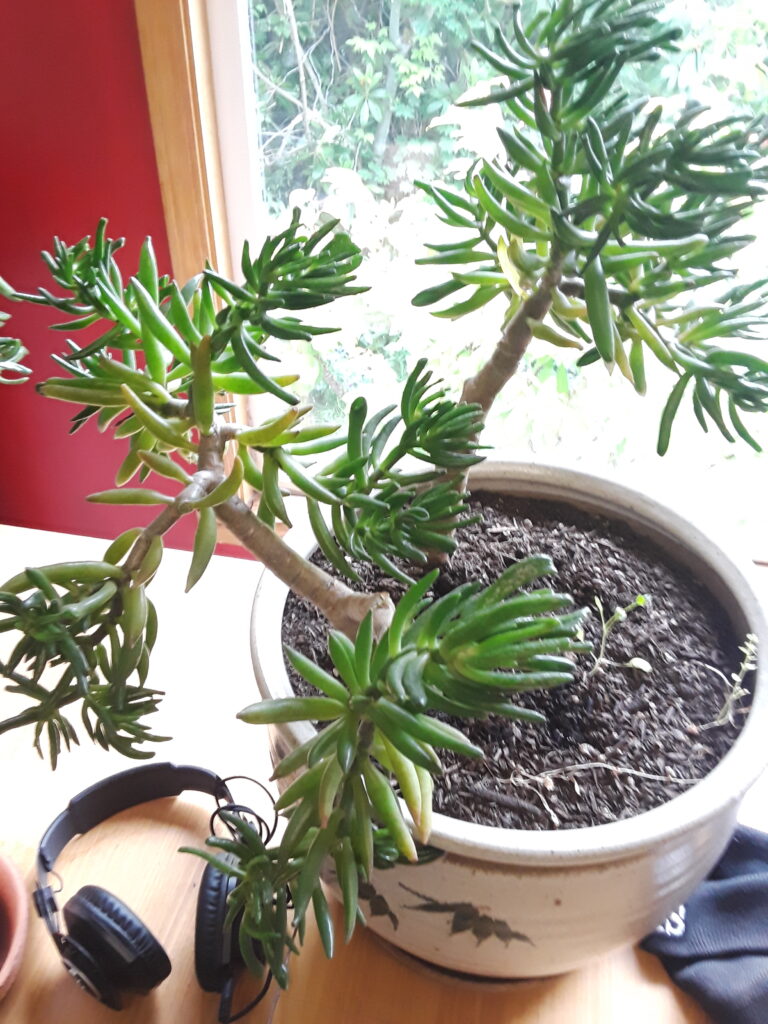
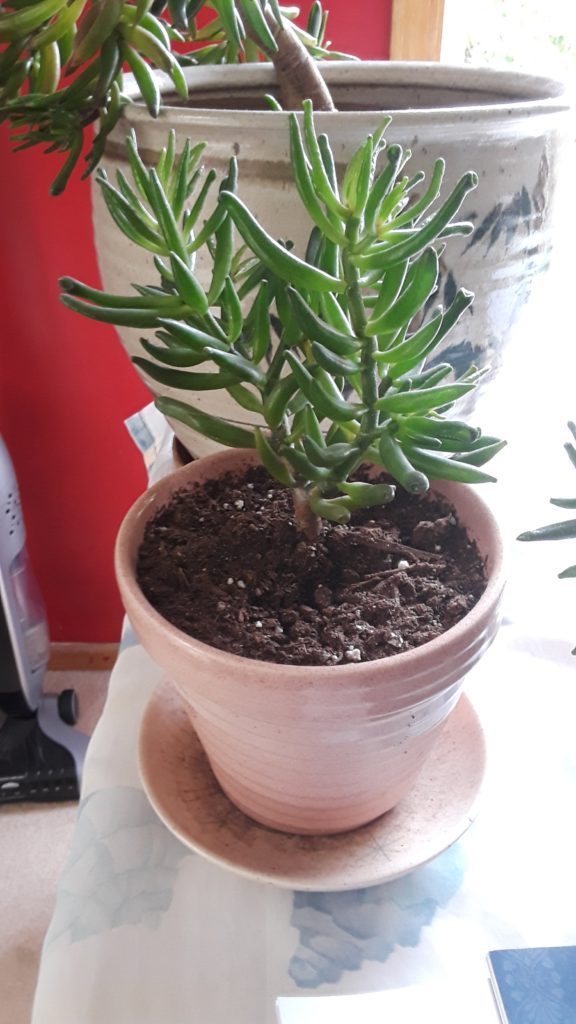
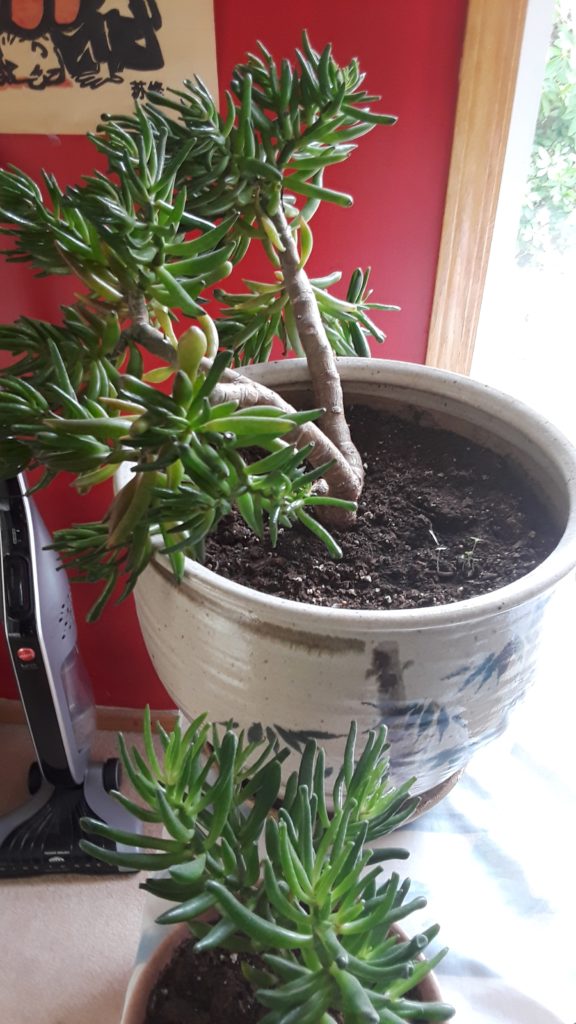
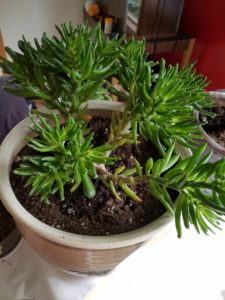
I have a couple of jade plants of different varieties, the big leaf, the climbing one, the long finger leave, the spiny leaf and the small thin one.

There is one jade plant with the pink flower and it was taken at my Aunt’s house in Melaka.

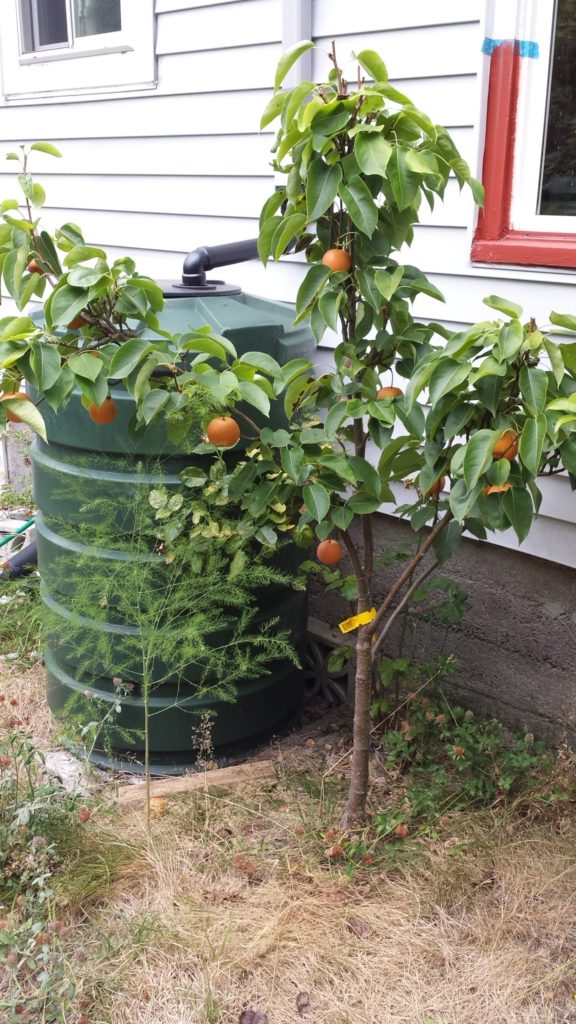
Yes, I do have a big garden with lots of fruit tress and a big vegetable garden. I have Asian pear trees, regular pear tree Italian prunes, fig, apples, Rainer cherry trees, Apricot, Japanese persimmon, and who knows what. Also included are blueberry, raspberry, and strawberry, I grow lots of green beans, Chinese pea pods, Chinese spinach, zucchini, char, spinach, asparagus and more than I can remember.

I buy most of the seeds at the 99cent store , 10 packets at a dollar. How can you beat that!!!

Anyway, if you have any good garden pictures, please post at the forum and share them with us.

Regards,

Chris

chrisgoh@WineInWashington.comou

If you have any questions about growing jade, shoot me an email. I am the Jade Master . Check out my other websites: www.GoodKarmaToYou.com and my funky site: www.BullShitWebsites.com

I do love growing grapes but cannot afford to own a winery.

How to grow Jade Plant

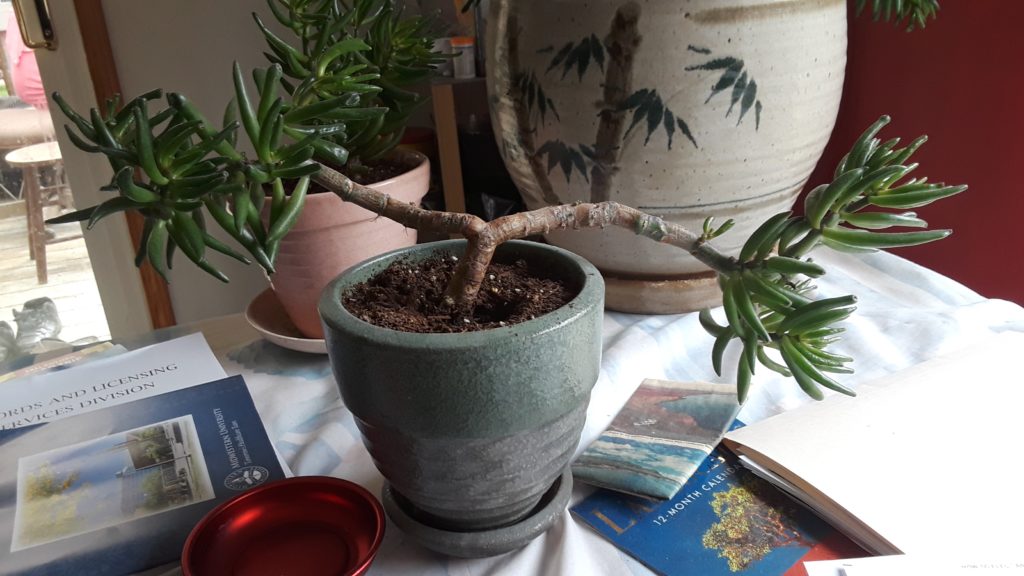
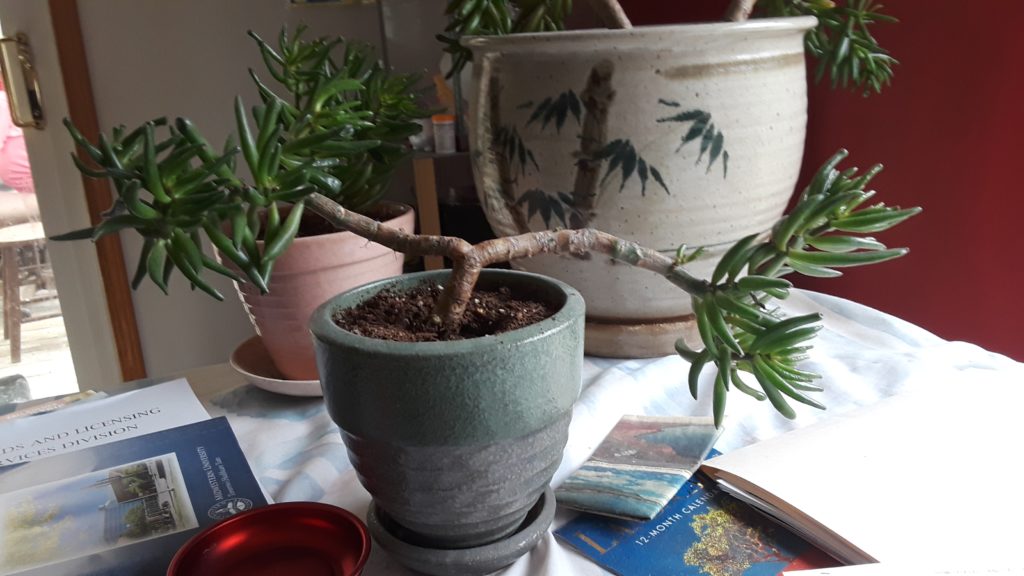
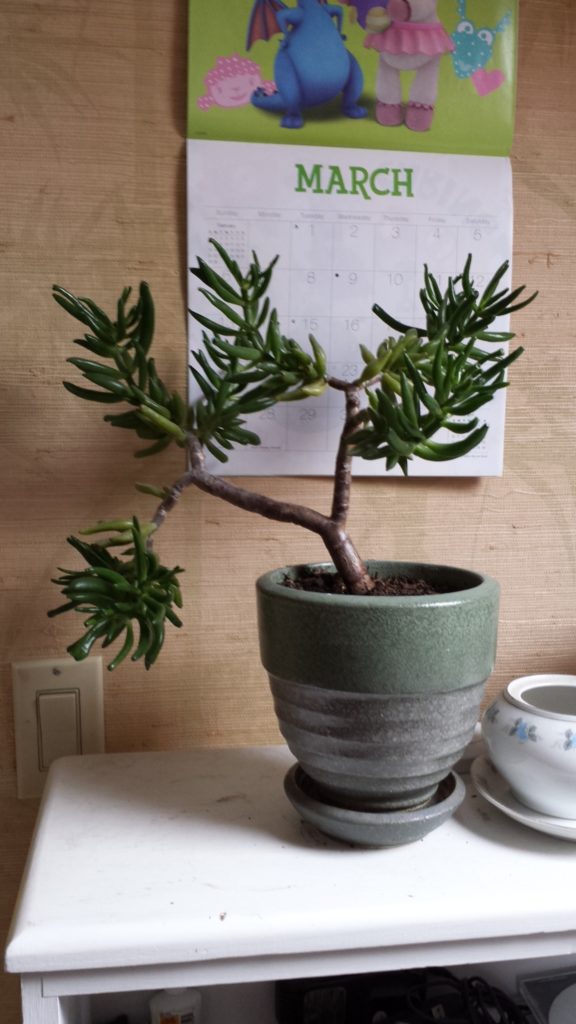
Though not completely indestructible, it’s hard to kill jade plants (Crassula argentea). They’re slow-growing, and, if kept in small pots, these succulents will stay small for several years. If you really want to think small, you can treat them as bonsai subjects. And if you want your plant to grow big, the jade plant responds well to regular watering and fertilization.

Photobucket

I move mine outside after the danger of frost has past and allow them to soak up the better growing conditions out there. Though the jade plant thrives in bright light, it should be introduced to the full strength of the summertime sun gradually by sheltering it in the shade during the afternoon as the leaves acclimate to brighter conditions. Watering can be hit-or-miss because jade plants are desert dwellers adapted to abuse.

In the home in winter, the plant should be watered less often and receive fertilizer only if in a bright location. It’ll tolerate poor light conditions during winter without flinching, but do keep it on the dry side.

Photobucket

Jade plants grow heavy with water and eventually become top-heavy. Repotting the plant in a larger container will improve its stability, but larger pots can be a problem when space is at a premium. Another solution is to repropagate the plant and start over.

Cuttings can be taken at any season, but spring is an ideal time to propagate jade plant, especially if your plants summer outdoors. Take three to six (or even more) cuttings from the upper part of the plant. Make the cuttings as long as possible without fear of the new plant toppling over.

Rather than stick the cuttings directly into the pot, set them aside for a week to allow the cut stem to dry and seal over. When it’s time to pot, crowd all of the cuttings into a single container. (A 6-inch pot works great, but any size will work.)

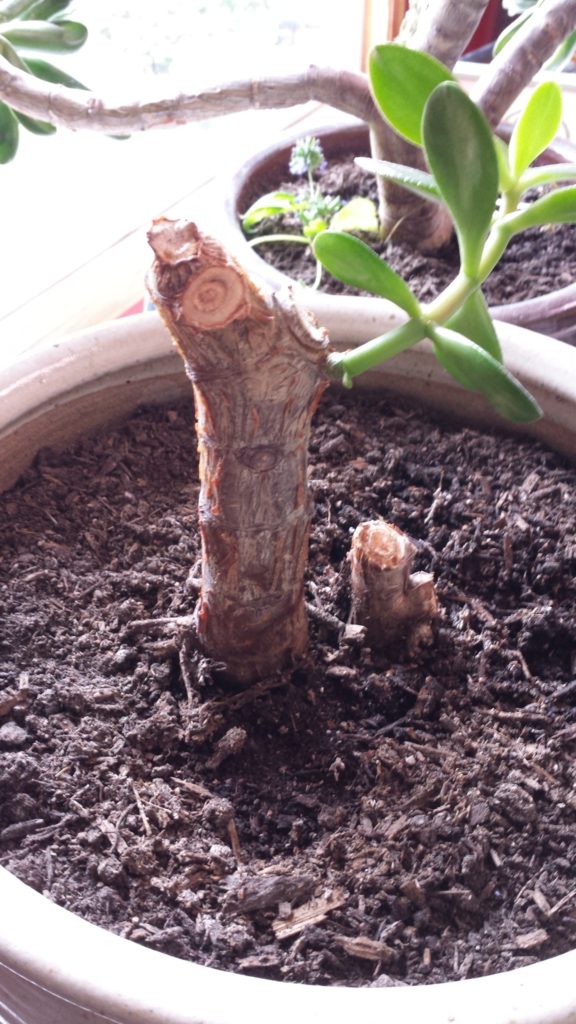
Rooting hormone may speed things along, but it isn’t a requirement for rooting. Water the pot as if the cuttings had roots. (In a month or two they will.) The original plant can be discarded or, if you have room to keep it, trim it back severely and allow it to regrow from the stubs.

The most common problem of jade plant is mealybugs – an insect pest that attaches itself at the juncture of the leaf and stem. An easy control is to use cotton swabs dipped in rubbing alcohol – then go at them one at a time.

Another ailment, though certainly less common, is sometimes seen on large, old jade plants: I call it sudden limb drop. In this unusual malady, a major limb will inexplicably fall from the plant without warning. Jade plants have natural suture points on the stem, which allow them to “self-prune” as lower parts of the plant get shaded out by the upper canopy. If a plant has been dry (as it often is during winter) and then suddenly gorges itself with water, these weak sutures can snap off as the water’s weight rushes into the branch.

Several stem rot fungi and at least one bacterial disease can also cause stem collapse, but in these cases it will be easy to see a definite rotten lesion. If there’s no sign of decay, the fallen limb can be rooted. But if decay lesions are noted, trim out the affected portion and back off on your watering.

A Tree’s Survival Depends on its Roots

A Tree’s Survival Depends on its Roots

Sometimes the most unlikely plants survive Nature’s challenges. Look at a live oak with huge limbs extending wide, each one weighing more than your truck. Battered from every direction, it still stands. Consider longleaf pine, the lone survivor when others of its species topple right over in winds of hurricane strength. A plant’s root system affects its resilience.

Fibrous or Tap Roots
Every rooted plant falls into one of two categories: those with one main root called a “tap,” or those with a root system that is spread out, consisting of many smaller fibrous roots. Even tap-rooted trees such as pines and cedars have some lateral roots, of course, but the root zone area is always deeper than it is wide. Fibrous-rooted trees have some major artery roots, with many smaller roots branching out from them. Each type of root system has its advantages, mostly the result of evolution to survive in the native environment. In the garden, knowing the type and extent of your plants’ roots can guide you in nurturing these all-important anchors.

Proper Fertilizing
The root zone of an oak, which has fibrous roots, extends out at least to the drip line of the tree — the point where rainwater drips off the edges of the branches onto the ground. That is where the most active roots are growing, the place to apply fertilizer in the traditional “drill and fill” method that puts granular fertilizer into holes made with an auger. Tap-rooted trees, by contrast, benefit from fertilizer placed closer to their trunks and deeper in the ground.

Treating Compaction
Roots of established trees get compacted over time. When this happens, roots die because the soil packs too tight around them, oxygen in the soil is depleted, and trees suffer. Compaction is usually the result of pressure exerted from above, such as foot traffic and parked cars. Some occurs naturally, however, as clay soils age. You should certainly park the car somewhere else, and you can usually redirect foot traffic, but root aeration may be a wise choice for older trees, even those with exposed roots. This kind of aeration is different from lawn aeration. Professionals that offer this service may be difficult to find, but are worth seeking.

Helping Trees Straighten Up
When your best efforts still result in trees bent by the wind, do not rush to pull them back up because they may rebound. But if a tree has not recovered in a few days, take action. If the roots are exposed, gently replant them, even if you must prune the tree or shrub to return it to an upright posture. Plants without exposed roots that can be gently brought back up should be straightened, by a few inches a day. Sometimes all it takes is stepping on the soil opposite the leaning side and pulling the tree back up.

Larger trees and those more bent over will need to have a soft support looped around their trunk. Install a pipe or other strong support several feet away from the trunk, pull the looped rope towards vertical support, and secure it to the pipe. Every few days, pull it closer to upright. Be aware, though, that sometimes all your efforts are in vain once the next storm arrives!

Wine in Washington

Wine in Washington

Located on approximately the same latitude (46ºN) as some of the great French wine regions of Bordeaux and Burgundy, Washington State wine “Touring” country includes 9 federally recognized American Viticultural Areas (AVA’s), commonly known as appellations; three of them share territory with Oregon State. Climates of individual Washington wine regions differ dramatically, being cross cut north to south by the Cascade Mountains.

A variety of climates and soils combine with the long summer sunlight hours of northern latitudes to create prime growing regions, predominantly in the valleys and on the hillsides of areas east of the Cascade Mountain range. Washington wineries benefit from grapes ripening in these areas which experience about two more hours of summer sunlight each day than in California wine regions. Gradually cooling autumn temperatures in Washington also help wine grapes reach full maturity, while maintaining desirable acid levels.

Vineyards on the east side of the Cascades grow 99% of Washington’s wine grapes. Seven of the state’s eight official AVA/appellations are located here — the macro appellation of the Columbia Valley encompasses the smaller Yakima Valley AVA, Red Mountain AVA, Walla Walla Valley AVA, Horse Heaven Hills, Wahluke Slope and Rattlesnake Hills (Washington State’s newest appellation). The Columbia Gorge AVA begins at the western edge of the Columbia Valley AVA and continues west and south to areas along the Columbia River in both Oregon and Washington. Two other emerging regions benefit from the huge rain shadow created by the Cascade Mountains, the North-Central Washington region (often referred to as the Columbia Cascade region) and the Lake Chelan area (AVA application in process).

All totaled, Washington wine regions produce more wine grapes than any other state in the U.S., except California. Wine grapes are now the fourth most important fruit crop in Washington State behind apples, cherries and pears. The following wines are in limited distribution. Look for them when in Washington state.

Spring Barrel tasting is your chance to get a jump on tasting and purchasing some of the best wines in wine country. A visit to the Valley on this weekend will allow you to sample yet-unfinished wines from the barrel.

Barrel tasting allows tasters a sneak preview of upcoming vintages from their favorite wineries. This special weekend in the Yakima Valley features winemakers and cellar staff who are on hand to share insights and answer questions on the winemaking process. Many of the 50 participating wineries make special efforts to enhance the wine tasting experience by adding delicious cheeses, sauces, salsas, and even desserts to the mix along with special tastings and education.

As the oldest wine region, or appellation, in Washington State, Yakima Valley has many small wine towns whose residents enjoy sharing a rural lifestyle with visitors. The region produces a wide array of wine varietals grown in vineyards that range from the Yakima Valley to hillside plantings. The three-day barrel tasting allows visitors and locals to leisurely visit the numerous wineries that have made the Yakima Valley region one of the most interesting and prestigious viticultural regions in the country

Wine Domains for Sale

Wine Domains for Sale:

OREGONFINESTWINE.COM
OREGONFINESTWINES.COM
OREGONGRAPEGROWERS.COM
OREGONWINECELLARS.COM
OREGONWINESHOPS.COM
PACIFICRIMVINEYARD.COM
PACIFICRIMVINEYARDS.COM
PACIFICRIMWINEMAKER.COM
PACIFICRIMWINERIES.COM
PACIFICRIMWINERY.COM
PACIFICWINERY.COM

More wine domains available.

chrisgoh@WineInWashington.com

Wine Buying Tip

Wine Buying Tip

This is the only Wine Buying Tip you ever need to know!!!

1. Know your store

Every wine shop is different. Different focus, different selections, different pricing structures. Choose the one that works best for you. If you are new to the wine game and every bottle on the shelf is over $50 then you are probably in the wrong place. Look for stores that have either organized wine tastings or have wine available by the glass. What better way to know if you like a wine before buying than to taste it?

2. Have a plan

Have in mind what the wine is for before you are bogged down by numerous regions, prices, etc. Are you looking for a simple wine to serve with dinner or planning a party for twenty? Knowing what you are looking for before you are in the store will help you to make better selections than just walking in and browsing until something strikes your fancy.

3. Don’t be afraid to bring resources

There is a myriad of different sources of information on wine out there and bringing some with you to the store can only help in making an informed decision. Books, magazines, brochures and even, ahem, websites provide valuable information on producers and vintages that it is impossible to keep track of. The difference between a good vintage and a so-so vintage can be the difference in a wonderful wine and a so-so one. Resources such as The Wine Spectator and The Wine Advocate and even yours truly at winegeeks.com offer ratings of individual wines that can be extremely useful when selecting a wine, but remember: just because a wine isn’t rated or has a mediocre score doesn’t mean it is a bad wine. These are guidelines and someone else’s opinion.

4. Survey the land

Don’t get caught in one section of the wine store. While some locales are very well organized, many are not, and the best bargain of the day may be just around the aisle. A quick trip around the shop to gain your bearings might be a good way to make sure that nothing is missed.

5. Develop a relationship with the owner/salesperson

Never be afraid to ask for help or a recommendation. Running into the pushy salesperson may be inevitable, but usually anyone working in the store will share your enthusiasm for the grape and asking what they like may get you a great bottle of wine. Also any salesperson worth their salt can get a feel for what you enjoy after a few trips to the store or even after answering just a few well-placed questions. Return trips and evaluations of what you tried last week can help the salesperson to judge your tastes.

6. Price does not equal quality

While a monstrous price tag may be well deserved for that bottle of 20-year-old Bordeaux, wines today are increasingly priced according to start-up costs for the winery or even the level of investment from outside sources instead of quality or reputation. In fact, wines from the traditional wine growing regions are sure to be higher in price than something from a less known vineyard area regardless of how good the wine is. Use your resources!

7. Look for value regions and 2nd labels

Many wine regions are known for their ability to produce very nice wines at still reasonable prices. Spain, Australia, Argentina and Chile are just a few countries to try. Another option is to try wine from areas just outside of more well known wine growing regions. Instead of the pricey Pomerol in Bordeaux, try Lalande-de-Pomerol. Same grape (Merlot) from just down the road at a much lower price. Also, look for the 2nd labels of more established wineries. These are wines sold under a different label from a quality winery sold at a lower price, a practice quite common in Bordeaux and gaining steam in California.

8. Be willing to experiment

Trying something new can be a great way to learn about new wines and new countries. Try a recommendation from someone at the shop, sample a new region, or even go with the advice of the shelf talking card pinned next to a wine. It may be the best wine that you have ever had!

9. Buy discounted wine

Most shops offer a 10% discount on wine sold by the case, mixed or not. Look for any close-out specials or wines on sale. Because it is half-off doesn’t mean it is terrible. Wines are often sold at what the state dictates, and it may be more than what the market will bear. These may be marked down significantly before the next vintage arrives, and can offer significant savings to the consumer.

10. Buy wine online

My Wines Direct - Holiday Gift Baskets
There are numerous sites that offer online sales of wine. These sites can offer wines at considerably less than your local store or have hard to find rarities. Be forewarned: Many states do not allow point-to-point sales of wine or alcohol. Most sites will list which states they can ship to. This is a contentious issue soon to be decided by the U.S. Supreme Court, but until then make sure you read the fine print.

Well, there you have it. This is by no means all you need to know when buying wine but it will certainly help you along your way. Use these ten points and the trepidation of wine buying should fade to the bottom of your stomach like the tannins of an old port. It should be loved and looked forward to like shopping for any thing of beauty, like going to the car parts store for your ‘67 Chevy or to the jewelry store on Valentine’s Day. The best part is how much do they have at the jewelry store for less than ten dollars?

Wine Guide: Storing Wine

Storing Wine

Many people think that if they’re going to store wine at home then they need a cellar. But the word “cellar” conjures up images of dark, cavernous chambers cut out of bedrock, or slick, temperature and humidity-controlled rooms lined with mahogany wine racks. All very nice, but not at all necessary. We recommend you interpret “cellar” somewhat loosely.

There are four main things to consider when storing wine: temperature, light, vibration and keeping the cork wet.

Temperature: Both red and white wine likes to be kept cool. 55°F is ideal, but more important than this magic number is that the temperature doesn’t fluctuate. Better a constant 65°F than 40° one day and 80° the next.

Light: Bright light and sunlight can damage wine as it ages in bottle, so the darker the room, the better. Total darkness is easily achieved by simply closing the lid of the case or the closet door.

Vibration: Areas subject to heavy foot traffic (or vacuum cleaners) should be avoided as wine, unlike martinis, should be neither shaken nor stirred.

Keep the cork wet: Laying your bottles down on their sides keeps the wine in contact with the cork, which in turn prevents the cork from drying out. Dry corks contract, allowing air to pass into the wine and wine to leak out. If air gets in, it renders the wine dull and lifeless and it will taste more like old sherry than wine.

If you keep these basic requirements in mind, you’ll find it remarkably easy to find a place to store your wine, and you won’t need a cellar at all. A corner of the basement, a closet in a spare bedroom, your shipping box or the cupboard under the stairs will all do nicely. And remember, the longer you plan to store your wine, the more important these factors become. If a newly-purchased wine is to be drunk in a day or two, it really doesn’t matter too much where you keep it, but if the wine is to be kept for weeks or months then find it a nice cool, dark spot.

Now, some wines require not months but many years, even decades, of bottle aging before they’re ready to drink. This is a small percentage of all the wines made, but nonetheless, it is an important one. Where you store these high quality (and often expensive) wines designed for long aging takes on a special importance if your investment is to be protected. In this case you may want to consider one of the commercially available wine storage units, which come in a variety of sizes and finishes. Another alternative is off-site storage, where you rent a locker in a temperature and humidity-controlled wine storage facility. This option is great for wines that you don’t plan to drink for some years and has the added advantage of being out of reach; a real bonus during those weak moments.

As your collection of wine grows you’ll need to keep track of it. An old-fashioned cellar book where you record each new wine that goes into your cellar and cross them off as you take them out, works just fine. These days, however, there are also numerous cellar software programs that make it easy and fun to manage your wine collection.

Wine Video Website

Please visit

WineryVideos

Wine Domains for Sale

Wine Domains for Sale

www.WineInOregon.com

www.WinesinOregon.com

WINEBIBLE.INFO
WINEFROMAMERICAS.COM
WINEFROMASIA.COM
WINEFROMIDAHO.COM
WINEFROMINDIA.COM
WINEFROMOKLAHOMA.COM
WINEFROMTEXAS.COM
WINEFROMUNITEDSTATES.COM
WINEFROMUS.COM
WINEFROMUSA.COM
WINEINAFRICA.COM
WINEINASIA.COM
WINEINAUSTRALIA.COM
WINEINCALIFORNIA.COM
WINEINCHILE.COM
WINEINGERMANY.COM
WINEINHONGKONG.COM
WINEINIDAHO.COM
WINEININDIA.COM
WINEINNEWZEALAND.COM
WINEINOKLAHOMA.COM
WINEINOREGON.COM
WINEINSOUTHAMERICA.COM
WINEINTHISCOUNTRY.COM
WINEINUNITEDSTATES.COM
WINEINUS.COM
WINEINUSA.COM
WINEINWASHINGTON.COM
WINEJOBSEEKERS.COM
WINEMAKINGBOOKS.COM
WINEMAKINGTECHNOLOGY.COM
WINEOFASIA.COM
WINEOFGERMANY.COM
WINEOFIDAHO.COM
WINEOFOKLAHOMA.COM
WINEOFOREGON.COM
WINEOFSOUTHAMERICA.COM
WINEREBATES.COM
WINERYVIDEO.COM
WINERYVIDEOS.COM
WINESENSORY.COM
WINESFROMAFRICA.COM
WINESFROMAUSTRALIA.COM
WINESFROMIDAHO.COM
WINESINAFRICA.COM
WINESINAUSTRALIA.COM
WINESINCALIFORNIA.COM
WINESINCANADA.COM
WINESINCHILE.COM
WINESINCHINA.COM
WINESINGERMANY.COM
WINESINIDAHO.COM
WINESINNEWZEALAND.COM
WINESINOREGON.COM
WINESINSOUTHAMERICA.COM
WINESOFASIA.COM
WINESOFSOUTHAMERICA.COM
WINESOFTHECOUNTRY.COM
WINETUBETV.COM
WINEWOODINVILLE.COM

and many more.

email to chrisgoh@wineinwashingtonton.com

Learn About Wine from California

Learn About Wine from California

California wine has a long and continuing history, and in the late twentieth century became recognized as producing some of the world’s finest wine. While wine is made in all fifty U.S. states, it is California where the great majority (up to 90% by some estimates) is produced. California would be the fourth largest producer of wine in the world if it were an independent nation.
The early years of California wine

In 1769, Franciscan missionary Father Junípero Serra planted the first California vineyard at Mission San Diego de Alcalá. Father Serra continued to establish eight more missions and vineyards until his death in 1784 and has been called the “Father of California Wine”. The variety he planted, presumably descended from earlier Mexican plantings, became known as the Mission grape and dominated California wine production until about 1880.

California’s first documented imported European wine vines were planted in Los Angeles in 1833 by Jean-Louis Vignes. In the 1850s and 1860s, Agoston Haraszthy, a Hungarian soldier, merchant and promoter, made several trips to import cuttings from 165 of the greatest European vineyards to California. Some of this endeavor was at his personal expense and some through grants from the state. Considered the one of the founders of the California wine industry, Haraszthy contributed his enthusiasm and optimism for the future of wine, along with considerable personal effort and risk. He founded Buena Vista Winery and promoted vine planting over much of Northern California. He dug extensive caves for cellaring, promoted hillside planting, fostered the idea of non-irrigated vineyards and suggested Redwood for casks when oak supplies ran low.

In 1861 Charles Krug established Napa Valley’s first commercial winery in St. Helena.

In 1863, species of native American grapes were taken to Botanical Gardens in England. These cuttings carried a species of root louse called phylloxera which attacks and feeds on the vine roots and leaves. Phylloxera is indigenous to North America and native vine varieties had developed resistance. European vines had no such evolutionary protection. By 1865, phylloxera had spread to vines in Provence. Over the next 20 years, it inhabited and decimated nearly all the vineyards of Europe. Many methods were attempted to eradicate phylloxera but all proved temporary and none economical.

Finally Thomas Munson, a horticulturist in Texas, suggested grafting the European vinifera vines onto American riparia rootsocks. So, there began a long, laborious process of grafting every wine vine in Europe over to American rootstocks. It was only in this manner that the European wine industry could be retrieved from extinction.

In 1879 Captain Gustave Niebaum established Inglenook Winery in Rutherford, California a small village (in Napa County, California). It was the first Bordeaux style winery in the USA. Captain Niebaum’s wines became world renowned. His Inglenook wines won gold medals at the World’s Fair of Paris in 1889.

During the period when the Europeans were contending with phylloxera, the American wine industry was ironically flourishing. By 1900, America had a fully developed and proud commercial wine producing business. Many California wines received medals in European competitions. Barrels of California wine were being regularly exported to Australia, Canada, Central America, England, Germany, Mexico and the Orient.
Prohibition

The destruction of the American wine industry would come not from phylloxeria but from Prohibition in the United States. Thirty-three states had gone dry at the outbreak of World War I. Wartime Prohibition was enacted in 1919, followed by the Volstead National Prohibition Act and the 18th Amendment to the U.S. Constitution in 1920, forbidding the “manufacture, sale, or transportation of intoxicating liquors.”

Through a loophole allowing each home to “make 200 gallons of non-intoxicating cider and fruit juice per year,” thousands of otherwise law-abiding citizens became home winemakers and bootleggers. Prices for fresh grapes shot up, because of the increased demand and a railroad shortage of refrigerated freight cars in which to ship them.

Growers began replanting fine wine variety vineyards to juice grape varieties that shipped well. The massive plantings produced a constant surplus of low-quality grapes that persisted until 1971.

By the time of National Repeal, effective December 5, 1933, the industry was in ruins. Although some wineries managed to survive by obtaining permits to make wines used for medicinal, sacramental and non-beverage additive purposes, production dropped 94% from 1919 to 1925.
Repeal

Even after Repeal of Prohibition, several states stayed dry: Kansas until 1948, Oklahoma until 1957, and Mississippi until 1966. Seventeen states chose to establish monopoly liquor stores with limited selections. Today 10% of the US area and 6% of the population remain dry.

Anticipating Repeal, speculators and others soon flooded the legal market with quickly and poorly made wine. Dilettantes published books and articles warning Americans about rigid rules that must be followed to serve the proper wine with the proper food from the proper glass at the proper temperature. Faced with low quality products with which to risk committing social blunders and while remaining uncertain about the social acceptance of any alcohol, most Americans stayed away.

The only group of wines that sold well were the fortified dessert wines. Taxed at the lower rate of wine as opposed to distilled spirits, but with 20% alcohol, this group made the cheapest intoxicant available. Before 1920, table wines accounted for 3 of every 4 gallons shipped. After 1933, fortified wines were 3 of every 4 gallons shipped. It wasn’t until 1968 that table wines sales finally overtook fortified wines, regaining the status of most popular wine category.

Before 1920, there were more than 2,500 commercial wineries in the United States. Less than 100 survived as winemaking operations to 1933. By 1960, that number had grown to only 271. California had 713 bonded wineries before Prohibition; it took more than half a century, until 1986, before that many were again operating.

Prohibition left a legacy of distorting the role of alcohol in American life and ruining a fledgling world-class wine industry, which took decades of work to overcome. Research at the University of California at Davis and Fresno State University greatly assisted the new breed of vintners who arrived in California in the 1960s and who were committed to producing wine of the highest international standards.
Wine Revolution

André Tchelistcheff is generally credited with ushering in the modern era of winemaking in California. Beaulieu Vineyards (BV) founder and owner Georges de Latour hired Tchelisticheff in 1938. He introduced several new techniques and procedures, such as aging wine in small French Oak barrels, cold fermentation, vineyard frost prevention, and malolactic fermentation.

Brother Timothy; a member of Congregation of Christian Brothers was also very instrumental in the creation of the modern wine industry. After an earlier career as a teacher, he transferred to the order’s Mont La Salle located on Mount Veeder in the Mayacamas Mountains west of Napa in 1935 to become the wine chemist for the order’s expanding wine operations. The Christian Brothers had grown grapes and made sacramental wine in Benicia, California during Prohibition, but decided to branch out into commercial production of wine and brandy following the repeal of Prohibition. The science teacher was a fast learner and soon established Christian Brothers as one of the leading brands in the state’s budding wine industry; Brother Timothy’s smiling face in advertisements and promotional materials became one of the most familiar images for wine consumers across the country.

In 1965, Napa Valley icon Robert Mondavi broke away from his family’s Charles Krug estate to found his own in Oakville, California. It was the first new large-scale winery to be established in the valley since before prohibition. Following the establishment of the Mondavi estate, the number of wineries in the valley continued to grow, as did the region’s reputation.

Some California wine makers began to produce quality wines but still had difficulty marketing them. Frank Schoonmaker, a prominent journalist and wine writer of the 1950s and 1960s introduced the idea of labeling wines using varietal (Pinot Noir, Chardonnay, Riesling) rather than generic names borrowed from famous European regions (Burgundy, Chablis, Rhine, etc.). Robert Mondavi was one of the first to label the majority of his wines by varietal names and was tireless in promoting the practice.

By the late 1960s and early 1970s, the quality of some vintners’ wines was outstanding but few took notice. On May 24, 1976, a blind tasting was held in Paris with a panel made up exclusively of French wine experts. After comparing six California Chardonnays with four French Chardonnays, three of the top four were Californian. All nine judges ranked Chateau Montelena the highest; Chalone Vineyard came in third and Spring Mountain Vineyard fourth. When reds were evaluated, Stag’s Leap Wine Cellars was ranked number one. This competition focused a great deal of attention on wines from the Napa Valley.

The red wines evaluated in 1976 were retasted in two separate blind tastings (the French Culinary Institute Wine Tasting of 1986 and the Wine Spectator Wine Tasting of 1986) and also in the The Wine Rematch of the Century. In all retastings, a California red was chosen first, while the French wines lost positions in the rankings.

In Oz Clarke’s New encyclopedia of Wine, Mr. Clarke writes that California “was the catalyst and then the locomotive for change that finally prised open the ancient European wineland’s rigid grip on the hierarchy of quality wine and led the way in proving that there are hundreds if not thousands of places around the world where good to great wine can be made.” He observes that “until the exploits of California’s modern pioneers of the 1960’s and ’70’s, no-one had ever before challenged the right of Europe’s, and in particular, France’s vineyards, to be regarded as the only source of great wine in the world.”

Fred Franzia and his Bronco Wine Company has caused recent waves in the business of California wine marketing. The company’s low priced Charles Shaw wine which is sold exclusively by Trader Joe’s markets along with the company’s other labels have attracted new entry level wine consumers to the fold but also has alienated many of the smaller vintners in the state by placing some downward pressure on pricing.

Backed by continuing research, California vintners continue to innovate in attempts to further enhance the quality and competitiveness of their products. The story of California wine continues to evolve.


July 2009
M T W T F S S
« Nov    
 12345
6789101112
13141516171819
20212223242526
2728293031  

Tags

How to grow Jade Plant largest Jade trees

Categories